Phones answered 24/7Phoenix, AZ 85003
Call (833) 490-5225
Urgent? Phones answered 24/7

Evaporative Cooler Leak Water Damage in Phoenix

Cleanup after a rooftop or wall swamp cooler leaks: wet ceilings, soaked insulation and stained stucco, dried to readings.

  • Phones answered 24/7
  • Monsoon leaks, slab leaks, AC and cooler drips
  • Emergency price agreed before a hose comes off the truck
  • Meter readings and photographs you can hand your insurer

Get a fast quote

Fastest: call (833) 490-5225. Or send this and we call you back.

Swamp Cooler Leaks

Evaporative Cooler Leak Water Damage: what it covers

Quick answer

An evaporative cooler leak is water escaping a swamp cooler's pan, float valve or supply line instead of running over its pads. On older Phoenix houses the cooler sits on the roof, so the water lands in the attic and the ceiling. Phoenix Water Damage Restoration dries everything it soaked across Maricopa County.

Evaporative Cooler Leak Water Damage illustration for Phoenix, AZ

Shut the water off to the cooler first. There is normally a small valve on the line that serves it, and the main shut-off works if that valve will not turn. Then switch the unit off at its own disconnect. A float valve stuck open keeps filling for as long as it has water to fill with.

Swamp coolers are one of the few genuinely regional water problems left in the Valley. Central air took over new construction decades ago, yet coolers are still working away on the roofs and side walls of post-war houses, and they hold an open pan of water directly above a ceiling for half of the year.

A cooler or HVAC technician repairs the float valve, the line or the pan. We handle the water indoors: the ceiling, the attic insulation, the wall it ran down and the flooring on the slab. Calls are answered 24/7 and a crew goes out as fast as one is free.

Service area
Phoenix & Maricopa County
Availability
Phones answered 24/7, emergencies first
Typical cost
$800–$3,000 (estimate)
Warning signs

Signs you need evaporative cooler leak water damage

Do not climb onto a wet roof to look at a cooler, and do not reach into the cabinet while the unit still has power, because the blower motor and the pump are both live in there. Scale, rust and whatever has blown into the pan make standing cooler water dirty, so keep bare skin out of it and wash up afterwards.

  • Water running down the stucco below a rooftop cooler, or a streak that reappears every time it runs
  • A ceiling stain directly under the cooler's roof opening or beside its duct
  • Water trickling steadily from the overflow pipe instead of the occasional drip
  • A cooler that runs but barely cools, which can mean the pan is not holding water where it should
  • Rust-colored streaks on the roof around the unit, or a pan with flaking metal and pinholes
  • A matted or discolored patch of attic insulation visible from the hatch
  • Water appearing the day the cooler is switched on for the season, then again a few days later
  • Mineral crust building around the float valve or on the small copper line feeding it
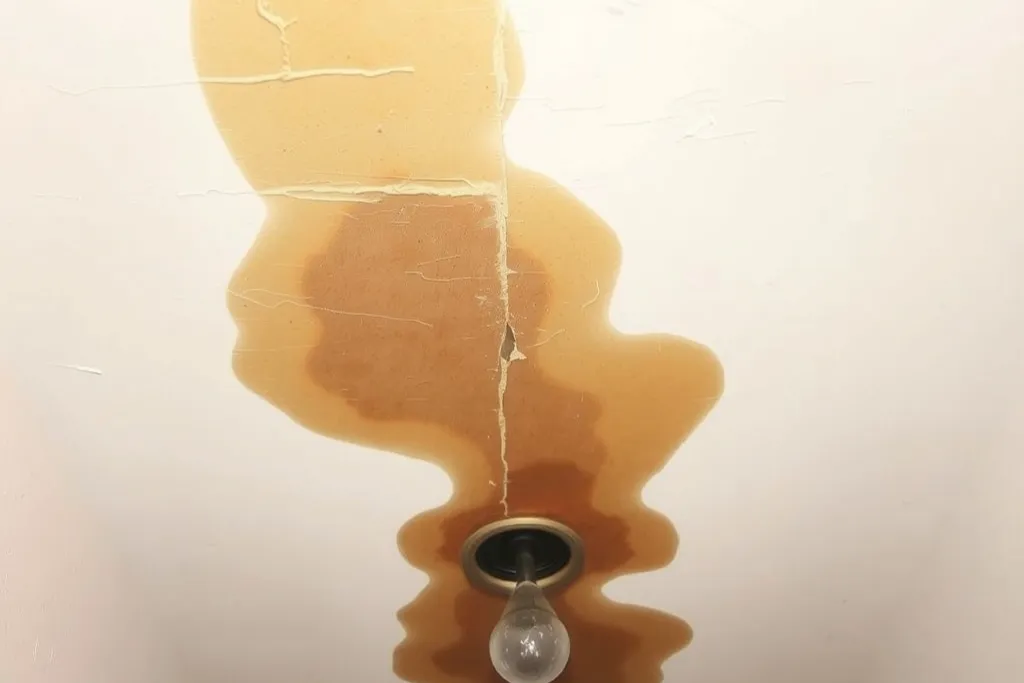
A spreading brown water stain on a hallway ceiling with a sagging, blistered seam.
Cooler water sits in the ceiling cavity first; the stain is the last part to show.Every photograph here is an illustration of the sort of building, damage or drying work described on the page, and none of them shows a loss restored by this business.
Our process

How our evaporative cooler leak water damage visit works

  1. Close the supply

    The water feeding the cooler is shut at the valve on its line and the unit is switched off at the disconnect. That usually ends the leak on its own, because the float and the line are the parts that let go.

  2. Follow the water down from the roof

    A technician looks at the pan, the curb and the duct opening, then works inside with a meter and a camera. Cooler water often runs along the ductwork before it drops, so the wet area and the cooler are rarely in the same place.

  3. Clear the wet insulation and open the ceiling

    Soaked blown-in insulation under and around the duct is bagged out, and stained or softened board is cut back to firm edges. Rust and mineral staining from the pan leaves with that material.

  4. Dry the cavity, the wall and the slab

    Air movers and a dehumidifier run until framing, board and flooring all meet their goals. Pan water that has sat through a season is treated as contaminated, so porous material it reached comes out rather than being dried in place.

  5. Rebuild the ceiling

    New insulation, board, texture and paint go in after the readings hold. That repair is quoted on its own once the drying is signed off.

Cost

How much does evaporative cooler leak water damage cost in Phoenix?

A cooler leak is usually one ceiling and one room with a few days of drying. The rows below are the ones that come up most often, and water that has stood in a pan all season is handled as gray water, which changes the per-square-foot band.

Evaporative Cooler Leak Water Damage pricing in Maricopa County (2026)
JobTypical rangeWhat it includes
Water heater, appliance, AC or swamp-cooler leak cleanup (extraction + drying, one area)$800–$3,000Cooler repair belongs to a cooler technician and is not in this figure
Category 2 (gray water) mitigation (per sq ft)$4.00–$7.00Cost guides for the Phoenix area report this band where water is treated as gray
Ceiling water damage repair (one section, incl. texture + paint)$500–$1,800Patch, texture and paint under the cooler opening
Wet carpet pad removal and disposal (per sq ft)$0.75–$2.00Where water reached carpet in the room below
Structural drying for one room (3–5 days, equipment + monitoring)$800–$2,500Equipment plus daily readings against a target
Antimicrobial application (per sq ft)$0.50–$2.00On framing and board after pan water, where it suits the job

Read the table as a planning range for the Valley in 2026 rather than a bid. A crew leader walks the wet rooms with you, puts a figure on the emergency stage and waits for your go-ahead; repairing the cooler itself lands on a cooler technician's bill.

Job stories

Typical jobs for evaporative cooler leak water damage

Typical job
Illustration: A rooftop cooler floods a Maryvale hallway ceiling on its first run of spring

A rooftop cooler floods a Maryvale hallway ceiling on its first run of spring

What homeowners notice
On the first warm week of spring, a Maryvale homeowner switches on the rooftop evaporative cooler that has sat covered all winter. Within the hour the hallway ceiling below it is dark and sagging and water is running down the wall onto carpet, because the float valve has stuck open and the overflow is draining into the roof structure instead of away from it.
What we do
Power to the cooler and to the hallway lighting circuit goes off first, then the water line feeding the unit is shut. A technician relieves the sagging drywall through a small opening so trapped water drains into a bucket, reads the ceiling framing and the top of the wall with meters, and bags out the soaked blown insulation sitting above the ceiling. Air movers and an LGR dehumidifier dry the cavity while a cooler technician replaces the float valve and the split quarter-inch supply line on his own call.
What to expect
The cavity and framing reach goal after several days of logged readings, and the ceiling patch, sprayed texture and paint are quoted separately once the drywall around the opening is dry.

3–4 hours typical visit

Why do swamp coolers leak in spring?

Because they spend the winter dry. A cooler drained and covered in October sits through five cold months, and gaskets stiffen, the float valve sticks, rust spots in the pan spread and a line that was already weak can split. Turning the water back on in March finds all of it at once.

A sensible start-up is ten minutes of watching. Turn the water on, let the pan fill, and check that the float shuts off at the right level and that the overflow pipe is not carrying a steady stream. Then look at the roof around the curb and the stucco below it before you walk away.

Fall shut-down is the other habit that matters. A unit that was not fully drained and covered can sit all winter with a line, a pan or a valve already damaged, and it shows nothing until the water comes back on in spring. The swamp cooler and AC leak guide goes through the start-up and shut-down routine in order.

What actually fails on a cooler?

Four parts, mostly. The float valve that is supposed to stop the filling, the small copper line that feeds it, the overflow pipe meant to carry excess away, and the pan itself, which corrodes from the inside where hard water leaves scale. Any one of them puts water on your roof.

Hard water is the common thread. Phoenix tap water is among the hardest of any large US city, and a cooler pan concentrates those minerals further as water evaporates out of it all day. Scale builds on the float mechanism and the bleed-off line, and the pan's metal gives up at the seams and around fittings.

None of those repairs are ours, and that is worth being clear about rather than vague. A cooler or HVAC technician replaces a float valve, a line or a pan. What the technician on our crew does is tell you which part the water appears to be coming from, with photographs, so you are not guessing when you make that call.

How is a cooler leak different from an AC leak?

A cooler leaks supply water under pressure, or a pan full of standing water. An air conditioner only loses the water it condenses, a slow trickle by comparison. That makes cooler leaks bigger, faster and dirtier, because cooler water has been sitting in a pan with mineral scale, dust and whatever blew in.

The practical difference shows up in what leaves the house. A clean condensate leak caught early can sometimes be dried with the insulation left alone; pan water that has soaked insulation and carpet pad means that material is bagged and removed instead.

Houses with both systems get both problems at different times of year. Condensate leaks cluster from May to September, cooler leaks in March and April and again in October, so a dual-system house really has two separate seasons to watch.

What about the roof around the cooler?

It gets looked at, because a leaking cooler wets the roof it sits on. On a low-slope or foam roof, water pooling at the curb softens the coating and can work into the deck beneath. The cooler technician handles the unit, a roofing contractor handles the roof, and the crew dries the inside.

Curbs and flashings are a weak point by design: a hole was cut in the roof to fit the unit, and the seal around that hole is decades old on most of these houses. Water from the pan runs right across it.

That is why a cooler leak and a roof leak are sometimes the same event with two causes. Monsoon wind also damages cooler housings and covers, which opens another path into the same hole.

Options

Types and options for evaporative cooler leak water damage

Rooftop down-draft coolers

The common Valley installation and the one that does the most damage. The pan sits on a curb above the ceiling, so anything it loses goes into the attic. These units are also the hardest to inspect, which is why a leak can run through several hot days before a stain reaches the paint.

Wall and window-mounted coolers

Side-wall units send their water down the outside of the stucco, in at the sill and into the wall cavity, so the damage shows as a dark band on the inside wall and a swollen baseboard rather than a ceiling stain. Block walls hide it longer than frame walls do.

Retired coolers still connected to water

Houses that switched to central air often left the cooler on the roof and the line to it live. Nobody runs the unit, nobody looks at it, and a corroded fitting can leak into the attic for weeks. If the unit on your roof is retired, having its supply shut off and drained at the valve removes the risk completely.

Maricopa County

Why evaporative cooler leak water damage is different in Maricopa County

The cooler belt runs through the older half of the Valley. The 1950s and 1960s block houses of Maryvale, Alhambra and Sunnyslope, the small Sun City homes from the 1960s onward, and plenty of central Glendale and west Mesa houses still carry a rooftop unit, often alongside a newer central system that does the real work in July.

Two months of the year matter more than the other ten. March and April bring start-up leaks as coolers come back online, and October brings shut-down season, when a unit drained badly or a cover left loose starts the next problem. Those are the weeks worth spending on the roof.

Pan water leaves a mark that plain water does not. Valley scale and rust stain insulation, board and stucco a yellow-brown that bleeds through fresh paint, so material a cooler soaked is usually replaced rather than sealed and repainted. Owners of 1950s houses in Maryvale and Alhambra tend to recognize that stain on sight.

Need evaporative cooler leak water damage today?

Call any hour and explain what is going on. You get a clear price before any work starts.

Related

Ceiling Water Damage

Stained, sagging or dripping ceilings dried and repaired, with soaked attic insulation removed and the leak traced first.

AC Condensate Leak Water Damage

Cleanup and drying after an air conditioner drain line clogs or a secondary pan overflows into a Phoenix ceiling.

Roof Leak Water Damage

Interior cleanup after a Phoenix roof leak: tarping, wet insulation removal and drying for foam, flat and tile roofs.

Mold Remediation

Containment, removal of affected porous materials, HEPA cleaning and documented drying, with the water source found and fixed first.

Guides

Read before you book

Swamp Cooler and AC Leaks That Stain Phoenix Ceilings

A ceiling stain under a swamp cooler or an air conditioner nearly always starts at one of six parts: a stuck float valve, the small copper supply line, a blocked overflow pipe, a corroded pan, a plugged condensate drain or a full secondary pan.

FAQ

Evaporative Cooler Leak Water Damage FAQs

My cooler is on the roof. Does somebody need to go up there?

Only to see what failed and whether water is still coming in. The repair belongs to a cooler or HVAC technician. If the roof is wet foam, tile or anything slick, nobody goes up until it is safe, and the work inside can start while that waits.

Can a cooler leak when it is switched off?

Yes, and it frequently does. The water line to the unit stays under pressure whether the fan is running or not, so a failed float valve or a split fitting leaks on a mild February day as readily as in June. Closing the supply valve, not the switch, is what actually stops it.

Should I replace the cooler with central air?

That is a question for a cooling contractor and depends on your ductwork, your roof and your budget. What we can tell you is what the water did, what it will cost to put right, and whether the pan looks like it is going to fail again next spring.

Why is the water stain yellow or orange?

Rust from the pan and mineral scale from the water, in most cases. A pan concentrates hard-water minerals as it evaporates, and both travel with the leak. Stained board and insulation normally come out instead of being painted, because that color bleeds back through new paint.

Does the attic insulation have to come out?

The wet part does. Insulation that has absorbed pan water mats down, keeps the board damp and holds the dirt and minerals that arrived with it. Dry insulation around it stays put, and new material is laid or blown in once the cavity reads dry.

How soon should I call?

As soon as the water is shut off. Dry Valley air gets credit it has not earned on a job like this: the slab, the tile bed and the insulation hold water for days, and EPA guidance is to dry water-damaged material within 24 to 48 hours. Phones are answered at any hour on (833) 490-5225.

Will insurance treat this as sudden damage?

Your insurer decides, and the answer often turns on how long it ran. A float valve that failed yesterday reads differently from a pan that has been weeping all summer. Photograph the unit and the stain before anything is touched, call your insurer early, and keep the readings and the drying log.

Find Phoenix Water Damage Restoration on